Status Hangover: The Moment Casino Loyalty Ranks Stop Feeling Like Wins
Photo: casino VIP loyalty card gold platinum membership status reward program, via www.shutterstock.com
Somewhere between your third month of hitting weekly wagering targets and your fourth cashback cycle that barely covered a decent dinner out, something shifts. The platinum badge is still there. The tier still says what it says. But the feeling that used to come with it — that hit of validation, the sense that you were winning at the game behind the game — that's gone.
Welcome to status hangover. It's more common than the casino industry wants to discuss, and understanding it might be the most financially useful thing a serious player can do.
What Status Tiers Are Actually Selling
Let's be direct about what premium loyalty programs are engineered to deliver. The tangible benefits — cashback percentages, reload bonuses, dedicated support lines, faster withdrawals — these are real, but they're not the primary product. The primary product is a sense of progression. A feeling of forward movement in an environment where the underlying math is working against you.
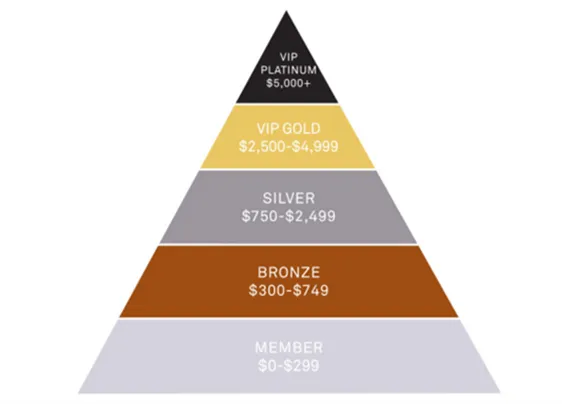
Casino loyalty programs borrow heavily from game design psychology. Tier names like Bronze, Silver, Gold, and Platinum map almost perfectly onto the progression systems in video games — systems specifically designed to create what designers call a "compulsion loop." You perform an action, you receive a reward signal, the threshold for the next reward goes up, you perform more actions. The loop is elegant, and it works whether you're collecting coins in a mobile game or accumulating comp points at an online casino.
The difference is stakes. In a video game, the cost of chasing the next level is time. In a casino loyalty program, it's money. Real money, with real mathematical expectations attached.
The Sunk Cost Spiral
Here's where platinum fatigue gets genuinely dangerous. Once you've invested significant play volume to reach a high tier, the psychology of sunk costs kicks in hard. You've earned this status. Walking away from it — or even reducing your play volume enough to risk a tier downgrade — feels like abandoning an investment.
This is not rational. The money you wagered to reach Platinum is gone regardless of whether you keep the badge or not. Your future decisions should be based entirely on whether continued play at tier-maintenance levels makes financial sense going forward. But the brain doesn't experience it that way. The tier feels like an asset. Losing it feels like a loss. And loss aversion — the psychological tendency to weight losses more heavily than equivalent gains — kicks in to keep you grinding.
US players tend to be particularly susceptible to this because American consumer culture runs deep on status signaling. We're conditioned from early on to treat visible rank markers as meaningful indicators of success. A platinum casino membership taps into the same neural circuitry as a premium credit card tier or a frequent flyer status level. The difference is that those programs typically reward spending that was happening anyway. Casino tier programs reward spending that the tier itself is generating.
When the Math Stops Adding Up
Let's run a quick reality check on what premium casino status typically delivers versus what it costs to maintain.
Most high-tier programs return somewhere between 0.5% and 2% of wagered volume in tangible benefits — cashback, bonuses, free spins, equivalent value. To maintain a Platinum tier at a serious international platform, you might be looking at $5,000–$15,000 in monthly wagering requirements. At a 1% return rate, that's $50–$150 back per month in real value.
Meanwhile, the house edge on the games generating those wagers is running between 2% and 10% depending on what you're playing. On $10,000 in monthly volume at a 4% average edge, you're looking at an expected loss of $400. The loyalty return of $100 doesn't cover that. It makes the net loss look smaller, which is a very different thing.
None of this means loyalty programs are worthless. It means they need to be evaluated as a partial offset to expected losses, not as a profit center. When you catch yourself wagering in order to maintain status rather than because you want to play, the program has stopped serving you and you've started serving it.
Recognizing the Crossover Point
The crossover from strategic gaming to status-chasing desperation usually doesn't feel dramatic. It's gradual. You start scheduling sessions around point deadlines. You switch to higher-volume games you don't actually enjoy because they accumulate points faster. You feel mild anxiety when your tier progress bar isn't moving.
Those are signals worth taking seriously. A few questions worth asking yourself honestly:
- Would I be playing this much if there were no tier system attached?
- Am I choosing games based on enjoyment and edge, or based on point accumulation speed?
- If my status got reset to zero tomorrow, would I feel motivated to rebuild it — or relieved?
The answers don't require you to quit playing. They require you to be honest about what's driving the sessions. Status can be a fun meta-layer on top of casino gaming. It becomes a problem when it's the reason you're at the table at all.