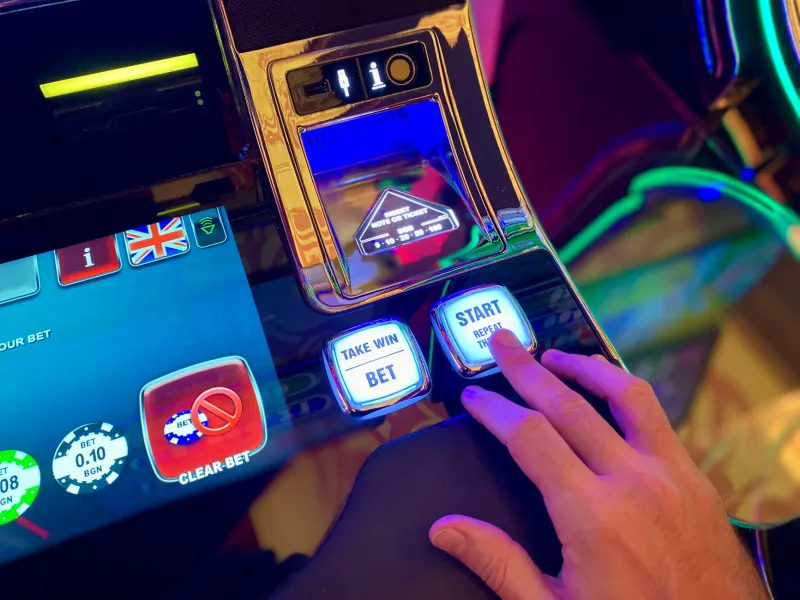
Always Open, Always Watching: How Casino Platforms Engineer Sessions That Never End

There's a moment most regular players know well. You sit down thinking you'll spin for maybe forty-five minutes, and then somehow it's 2 a.m. and the last two hours feel like they happened to someone else. You're not imagining it. That drift isn't a coincidence — it's the product of deliberate design choices baked into how modern casino platforms, and especially mirror-access ecosystems, are built from the ground up.
At Вулкан Платинум Зеркало, we spend a lot of time thinking about what makes a platform genuinely good for players versus what just makes it stickier. And the line between those two things? It's a lot blurrier than most casino sites will ever admit.
The Friction-Free Trap
Traditional brick-and-mortar casinos use physical friction as an accidental time-keeper. You have to drive there. You have to park. You have to walk to the machine or table you want. Each of those micro-barriers creates a moment where you can check in with yourself — do I actually want to keep going?
Online platforms, and particularly mirror-access platforms designed to circumvent regional blocks, have spent years systematically eliminating every one of those micro-barriers. Instant logins. Saved payment methods. One-click game launches. No waiting for a table to open up. No walking anywhere.
For US players accessing international casino libraries through mirror infrastructure, the friction-removal goes even further. Regional versions of the same platform are optimized for different time zones, meaning there's always a version of the lobby that feels like peak hours — active jackpot counters, live dealer tables with full seats, promotional banners timed to feel urgent. The platform doesn't sleep because some version of it is always in somebody's prime time.
This is the 'always-open' illusion in its most refined form. It's not that the casino never closes — it's that it's engineered to never feel closed.
Psychological Architecture You Probably Haven't Noticed
Beyond availability, there are subtler design patterns worth naming because once you see them, you can't unsee them.
Near-miss calibration. Slot algorithms in most jurisdictions are legally required to be random, but the presentation of results is not random at all. Near-miss outcomes — where two jackpot symbols land and the third just misses — are displayed at rates that exceed pure statistical probability. Your brain interprets near-misses as evidence of proximity to a win. It keeps you in the chair.
Ambient sound design. The audio layers in modern online slots are engineered to maintain a state of low-level arousal without ever spiking high enough to break your focus. It's closer to a sensory IV drip than entertainment. Multi-access platforms often preserve these audio environments even in low-bandwidth regional mirror versions because removing them measurably reduces session length.
Progress metrics that never resolve. VIP tiers, loyalty point counters, daily challenges, weekly missions — these systems are designed around what behavioral psychologists call 'incomplete loop tension.' Your brain has a documented bias toward finishing things it started. When a platform shows you that you're 340 points away from the next loyalty tier, it is deliberately triggering that bias. The tier itself is almost beside the point.
The 'just one more' architecture. Most platforms are built so that ending a session requires more clicks than continuing one. The next game auto-loads. The deposit button is always visible. Closing out takes you through a retention flow — a bonus offer, a free spin prompt, a 'are you sure?' screen that reminds you what you're leaving behind. Every additional click is another opportunity for the platform to change your mind.
Why Mirror Platforms Amplify All of This
Standard casino platforms already deploy these patterns. Mirror ecosystems — the kind that give US players access to international game libraries that geo-restrictions would otherwise block — layer on additional dynamics that make session management harder.
First, there's the novelty factor. When you can suddenly access slot titles and live dealer variants that weren't available through domestic platforms, the normal anchors you use to pace yourself don't apply. You don't have a history with these games. You don't have a sense of how long a session 'should' last. Novelty extends play almost automatically.
Second, multi-regional platforms often run parallel promotional calendars. A bonus that expired in one regional version might still be active in another. Players who understand mirror architecture can technically chase promotions across versions — but doing so removes the natural session endpoint that a single platform's promotion cycle would provide.
Third, and most importantly: the 24/7 access that makes mirror platforms genuinely useful for players in restricted regions also removes the last environmental time-cue that might otherwise create a stopping point. When there's no version of 'the casino is quieter right now,' there's no external signal that it might be a reasonable moment to step away.
Practical Strategies for Setting Real Boundaries
None of this means mirror platforms are inherently predatory or that the access they provide isn't genuinely valuable. It means that as a player, you're operating in an environment that is actively working against your ability to self-regulate — and you need to be deliberate about counteracting that.
Set a hard session timer before you start, not during. Decide on your session length while you're still in a neutral state. Use your phone's built-in timer or a browser extension. The moment you're mid-session is the worst possible moment to evaluate whether you should keep going — your judgment is already compromised by the environment.
Create artificial friction for yourself. Log out of your account after every session. Don't save your payment credentials. Make the next session start require a few extra steps. You're essentially rebuilding the friction the platform removed.
Treat your bankroll as a session-ender, not a loss-limiter. Decide on a specific dollar amount before you start and treat hitting that number — win or lose — as the automatic end of your session. This removes the need for in-the-moment decision-making, which is where platform design wins.
Rotate platforms deliberately, not impulsively. If you use multiple mirror access points, schedule which one you're using and when. Impulsive platform-hopping, chasing a bonus that's still active somewhere else, is one of the main ways session length extends without players realizing it.
Use the deposit limit tools that reputable platforms provide. This sounds obvious, but a surprising number of players don't. Setting a weekly deposit ceiling at the account level is one of the few friction points that platforms can't easily design around.
The Honest Bottom Line
Platforms like Вулкан Платинум Зеркало exist to give players genuine access to a broader gaming world — and that access is real and valuable, especially for US players navigating a patchwork of regional restrictions. But access and design are two different things, and understanding the design is part of being a smarter player.
The 'unlimited access' framing that mirror platforms often use isn't just a marketing line. It's a design philosophy. And unlimited access, by definition, means no built-in stopping points. That responsibility lands squarely on you.
The players who get the most out of these platforms over the long run aren't the ones who play the most — they're the ones who play on their own terms. That starts with understanding exactly how the architecture is working against those terms, and deciding in advance that you're not going to let it.