Infinite Game Libraries Are Breaking Your Focus — Here's How to Take Back Control
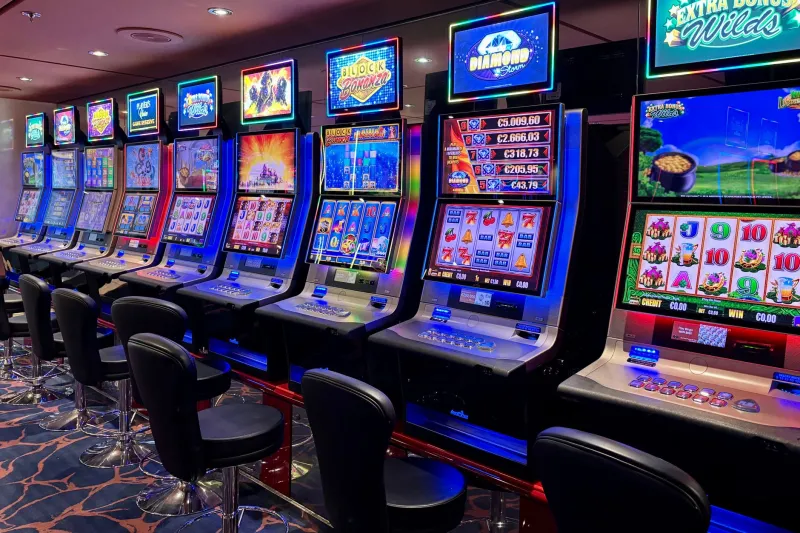
There's a version of this story that sounds like a win. You fire up Вулкан Платинум Зеркало, and within seconds you've got access to thousands of slots, a dozen live blackjack tables, roulette variants from three different software studios, and video poker rooms you've never even heard of. No geo-blocks. No restricted lobbies. Just a completely open casino floor sitting in your browser tab.
That's the dream, right?
Except somewhere between game number four and game number eleven of the session, something quietly breaks down. You're not playing worse because the games are rigged or the odds shifted. You're playing worse because your brain hit a wall it didn't even see coming — and unlimited access built that wall brick by brick.
The Science Behind Too Many Good Options
Decision fatigue isn't a self-help buzzword. It's a documented psychological phenomenon that affects everyone from judges ruling on parole cases to shoppers picking cereal at a grocery store. The more choices you process, the worse the quality of your subsequent decisions gets — not because you're dumb, but because deliberation is genuinely exhausting work for the human brain.
In a casino context, this plays out in a specific and financially damaging way. When you sit down with a focused game plan — say, three sessions on a medium-volatility slot with a defined loss limit — your decisions stay relatively clean. You know what you're doing and why. But the moment you start scrolling an endless library, comparing RTP percentages, watching preview reels, and jumping between tables looking for a "better feel," you've already spent mental energy that was supposed to go toward actual strategic play.
By the time you settle on something, you're already a little depleted. And depleted players make looser calls.
Mirror Platforms Amplify the Problem (And the Potential)
Here's the mirror paradox that doesn't get talked about enough: the same infrastructure that gives US players unrestricted access to international game libraries also removes the natural friction that used to slow people down.
On a restricted or limited platform, you'd hit a wall — game unavailable, region locked, title not supported. Annoying, sure. But that friction forced a kind of accidental discipline. You played what was available. Your session had shape by default.
On a fully open mirror platform like Вулкан Платинум Зеркало, there is no wall. Every Pragmatic Play title, every Evolution Gaming live room, every obscure Eastern European slot that never made it to mainstream US casinos — it's all sitting there, completely accessible. That's a genuine advantage if you know how to use it. But without structure, it becomes a trap dressed up as freedom.
The players who thrive in this environment aren't the ones with the most options. They're the ones who've figured out how to behave as if they have fewer.
What Session Drift Actually Looks Like
Most players who fall into this pattern don't recognize it as a problem because it doesn't feel like a mistake in the moment. It feels like exploration. Curiosity. "Just checking out" one more game before committing.
But look at the behavioral pattern from the outside and it's pretty clear: you open with a slot you actually like, hit a dry spell, switch to something flashier, lose a bit there, drift toward a table game to "change the energy," get bored, head back to slots but a different one this time, and somewhere in that loop you've burned through two hours and a meaningful chunk of your session budget without ever really playing anything with intention.
That's session drift. And it's almost entirely caused by having too many good alternatives one click away.
Four Practical Fixes That Actually Work
The good news is that abundance is fixable. You don't need to artificially limit your access — that would defeat the whole point of using a platform with an open library. What you need is a pre-session structure that your future, slightly-fatigued self can follow without thinking too hard.
1. Pick your games before you log in. This sounds almost embarrassingly simple, but it works. Decide what you're playing — specific titles, specific variants — before you open the lobby. Write it down if you have to. When you're not yet in the environment, your decision quality is at its peak. Use that clarity to make choices your in-session brain can just execute.
2. Set a game-switch limit, not just a loss limit. Most players set financial stop-losses. Fewer set session structure rules. Try capping yourself at two game switches per session. If you've moved twice and you're still not finding your rhythm, that's a signal to end the session — not to start hunting through 400 more titles.
3. Use the library as research, not as a playground. The depth of a platform like Вулкан Платинум Зеркало is genuinely valuable for discovering games you'd never find on a standard US-facing casino. But treat exploration as its own dedicated activity, separate from your actual playing sessions. Spend 20 minutes on a different day just browsing and bookmarking. Then play from your curated list.
4. Recognize the "greener grass" loop early. There's a specific thought pattern that triggers session drift: "This slot is cold, maybe that one's running hot." It feels like strategic thinking but it's mostly superstition dressed in logic. Slots don't have memory. The grass isn't greener. When you catch yourself thinking this way mid-session, it's almost always a sign that you're fatigued and looking for an exit ramp, not a better game.
Turning Abundance Into Actual Edge
Here's the reframe that changes everything. The players who consistently get the most out of open-access platforms aren't the ones who play the most games. They're the ones who use the breadth of the library to make smarter pre-session decisions — finding better RTP options, understanding volatility profiles, matching game mechanics to their current bankroll situation — and then play with the discipline of someone working a much smaller menu.
Unlimited access is a research tool. Focused execution is the actual game.
When you separate those two things and treat them as distinct activities, the mirror paradox stops being a trap. You're not overwhelmed by infinite options because you've already filtered down to the three or four that make sense for tonight's session. The library is working for you instead of against you.
That's the difference between a player who gets lost in an open lobby and one who quietly shows up every session with a plan — and leaves knowing exactly what happened and why.
The access was always the advantage. Structure is just how you actually collect it.